
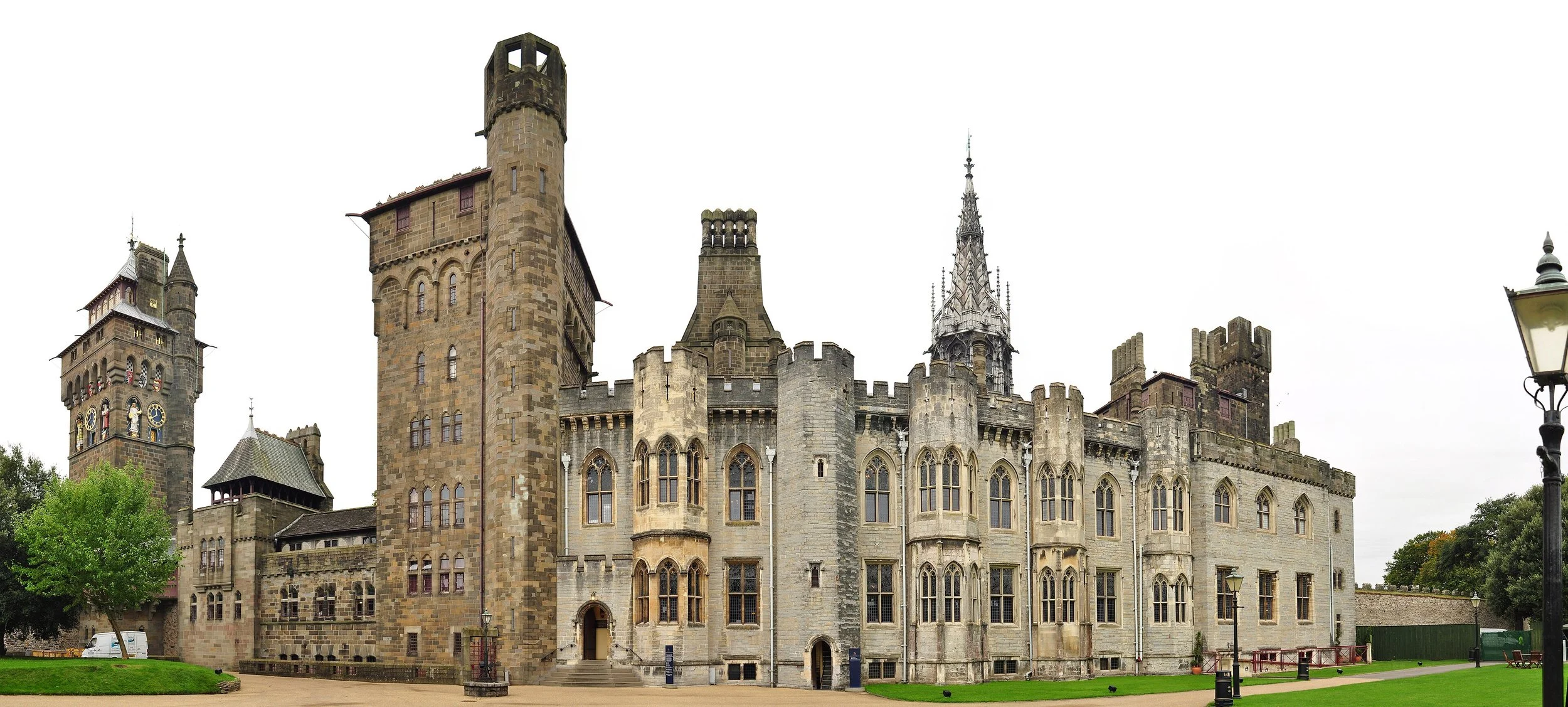
Party Wall Surveyors Cardiff
Party wall surveyors in Cardiff for extensions, loft conversions, period terrace works, boundary works and adjoining owner advice.
Our team of skilled party wall surveyors is dedicated to providing expert assistance tailored to your needs
Planning building work to your home in Cardiff? If the project affects a shared wall, sits close to a boundary, or involves excavation near a neighbouring property, the Party Wall etc. Act 1996 may need to be dealt with before work starts.
Meon Surveyors provides practical party wall advice for homeowners, Building Owners and Adjoining Owners in Cardiff. The advice is shaped around the kind of projects local residents actually carry out: extensions, loft conversions, chimney breast removals, structural openings, new boundary walls and foundation works close to neighbouring buildings.
Cardiff has a clear reason for needing careful party wall advice: the city centre is going through one of its biggest waves of development in decades. The Central Square regeneration area alone has seen a run of new residential towers, including proposals for several hundred build-to-rent homes and a 50-storey block that would be considerably taller than anything else nearby, close to Cardiff Central station. On the city's edge, the Churchlands development is bringing around 1,000 new homes off Wolverhampton Road, while land south of the M4 near Lisvane, Pontprennau and Cyncoed has been approved for around 2,500 further homes. All of this sits within a Replacement Local Development Plan process that is reshaping how and where Cardiff grows to 2036.
Not sure whether your Cardiff project needs a party wall notice? Contact Meon Surveyors for free, no-obligation advice, or use the online Party Wall Quote tool for a no-obligation estimate.
Need advice before works begin? Contact Meon Surveyors for free, no-obligation guidance from an experienced party wall surveyor.
Party wall advice for Cardiff homes
Cardiff has a broad range of homes, from period terraces and converted buildings close to the centre to more modern estates on the edges of the area. Party wall work may involve loft steels, chimney breast removals, rear extensions, side additions, boundary walls or excavation near neighbours. In compact streets, even a small project can affect more than one adjoining owner if walls, foundations or access are close together.
For homeowners, a useful starting point is a simple review of the works. A party wall surveyor can look at the drawings or project description and identify whether the Act is likely to apply, which adjoining owners may need notice, and what happens if a neighbour consents, dissents or does not respond.
With that scale of city centre and edge-of-city development under way, Cardiff homeowners in established terraced streets are increasingly likely to see building work happening nearby, whether it's a neighbour's extension in Cathays or Roath, or construction linked to one of the larger strategic sites. A rear extension in a Victorian terrace off Whitchurch Road, a loft conversion near Roath Park and excavation beside a garden wall are all different risks with different notice periods. Early advice helps homeowners understand those differences before committing to a start date.
When the Party Wall etc. Act may apply in Cardiff
The Party Wall etc. Act is separate from planning permission and building control. It can apply even where the work is permitted development, and even where the drawings have already been approved elsewhere. For domestic projects, the key question is usually whether the works affect a shared wall, a boundary line or excavation close to a neighbour. Party Structure Notices usually require two months before work starts. Line of Junction and three metre or six metre excavation notices usually require one month. Leaving that until the week before the builder arrives is one of the easiest ways to create delay.
Work to a shared wall or party structure
This can include cutting into a party wall for steel beams, removing a chimney breast, raising or repairing a party wall, forming structural openings, or carrying out works that affect a wall, floor or ceiling separating two properties. In houses this often means a shared wall. In flats and converted buildings, the party structure may be less obvious.
Building on or close to the boundary
A new wall built at or close to the boundary can fall under the Act. This is relevant for side extensions, garden walls, garages, outbuildings and some rear extensions. Boundary work is often where neighbour concerns first appear, because the work is physically close to the adjoining owner's land.
Excavation near a neighbouring building
Excavation can be notifiable where it is within the relevant distance of a neighbouring building and deeper than the neighbour's foundations. This is common for extension foundations, drainage connected with an extension, underpinning-type work, basement or lower-ground works and more complex structural projects.
Unsure of whether you need a party wall surveyor? Use our free tool, or get in touch with us today for a no-obligation chat.
Common Cardiff projects that may need party wall input
Victorian and Edwardian terrace extensions
Streets in Cathays, Roath and Canton often share party walls and roof structures, especially where beams need support.
Loft conversions in period terraces
Party wall notice may be required where beams bear into shared walls or roof structures are altered in Cardiff's dense terraced housing.
Conversions into flats or student housing
Older terraces converted into multiple units can make the party structure less obvious than in a standard house, particularly near the university areas.
Rear and side extensions on narrow plots
Excavation near adjoining homes is common where terraced plots are narrow and houses are built close together.
Works near city centre regeneration sites
Building work connected to the Central Square area or other city centre schemes can bring construction close to neighbouring residential streets.
Garden and boundary wall works
Older gardens, lanes and boundary walls in Cardiff's Victorian suburbs can make boundary works less straightforward than they first appear.
For Building Owners in Cardiff
If you are planning the works, you are usually the Building Owner under the Party Wall etc. Act. Your responsibility is to check whether the Act applies and, where it does, serve the right notices on the relevant adjoining owners before the notifiable work starts.
For Cardiff Building Owners, early advice is especially useful for projects in the city's dense Victorian terraces, or close to one of the larger regeneration sites now coming forward across the city. Meon Surveyors can review your drawings, confirm whether notice is likely to be required, identify affected adjoining owners, prepare the notices and help deal with responses. If the neighbour consents, the position may remain straightforward. If they dissent or do not reply, surveyor appointments and a Party Wall Award may be needed.
If you are planning works, use Meon's online Party Wall Quote route for a free, no-obligation estimate, or complete the Building Owner Appointment Form if you are ready to move forward.
For Adjoining Owners in Cardiff
If your neighbour is planning building work and you receive a party wall notice, you are usually the Adjoining Owner. Receiving a notice does not mean you are being awkward by asking questions. It means your neighbour believes the Act may apply and is starting the formal process.
For Adjoining Owners, the key is understanding whether the notice is valid, what work is happening near the property and whether a schedule of condition should be completed before works start. This applies whether the works are a next-door extension or loft conversion, or part of one of the larger housing developments now under way across Cardiff.
If you have received a notice, Meon can review it and explain your options before you respond. The Adjoining Owner appointment route is available where you want Meon to act.
Local property considerations in Cardiff
Cardiff is in the middle of significant change, from the high-rise residential schemes reshaping Central Square, including proposals close to Grade II listed buildings such as the former Head Post Office and Cardiff Central station's water tower, to large edge-of-city developments such as Churchlands and the approved housing sites near Lisvane, Pontprennau and Cyncoed. The city's Replacement Local Development Plan is managing this growth out to 2036, balancing new housing against Cardiff's conservation areas and listed buildings.
Areas such as Cathays, Roath, Canton and Splott each have their own mix of Victorian terraces, converted properties and later infill housing, so the party wall risk looks different from one street to the next. Many of these streets also fall within, or sit close to, one of Cardiff's numerous conservation areas, which adds a planning and design layer alongside, rather than instead of, the separate party wall process. The practical point is timing: party wall matters are easier to manage while a project is still being planned, rather than once the builder is booked and scaffolding is due.
The practical point is timing. Party wall matters are easier to manage while a project is still being planned. Once the builder is booked, scaffolding is due, or neighbours have already seen work starting, a simple notice issue can become more expensive and more stressful than it needed to be.
Nearby areas we also cover
Meon Surveyors provides party wall advice in Cardiff and across the wider area south Wales, including Newport, Barry, Bridgend and Caerphilly.
For wider support, Meon can also advise on party wall matters across the Wales area.
You can find also find the key projects we’ve undertaken throughout the country on our projects page.
FAQs about party wall surveyors in Cardiff
-
Large city centre schemes are generally set back from residential streets, but any development close to existing boundaries can be notifiable for the developer, and nearby owners may receive a notice as a result.
-
It may be, if foundations are within the relevant distance of a neighbouring building and deeper than that neighbour's foundations.
-
Yes. If a notice is ignored, a deemed dispute can arise and surveyor appointments may be needed before the covered works proceed.
-
They can do for loft conversions, chimney breast removals, structural openings or works to shared walls, since many of these streets were built with genuinely shared party structures.
-
Ask for the notice, drawings, start date and an explanation of the works closest to your property, then decide whether to consent or dissent.
-
No. A Party Wall Award deals with rights and procedures for notifiable works. It does not transfer ownership.
-
Yes, if both owners agree. This is known as appointing an Agreed Surveyor.
-
You can take advice earlier, but notices are normally based on sufficiently clear proposals. Do not wait so long that the notice period delays your start date.
Speak to a party wall surveyor in Cardiff
If you are planning works to your home in Cardiff, or you have received a party wall notice from a neighbour, Meon Surveyors can help you understand the next step.
We provide practical advice for Building Owners and Adjoining Owners, helping keep the party wall process clear, proportionate and properly managed.
Contact Meon Surveyors today for free, no-obligation party wall advice, or get a free quote immediately.